How Musical Instruments Shape Culture and Creativity
Key Takeaways
- Musical instruments are integral to cultural identity and expression.
- Technological advancements continually reshape the design and function of instruments.
- Instruments serve as catalysts for creativity, enabling new forms of artistic expression.
Musical instruments have been central to humanity for millennia, serving as more than mere tools for producing sound. They shape entire cultures, foster creative expression, and become symbols of identity across generations. The evolution of instruments—from ancient bone flutes to cutting-edge synths—offers a lens through which to view technological advancement and the shared stories of communities worldwide. Whether you’re exploring traditional artistry or searching for modern solutions like portable keyboards Huntington, WV, each instrument connects us to our past and future.
Through history, the musical tools we create not only reflect but also shape our social structures, religious beliefs, and creative endeavors. The profound influence of instruments resonates in everyday life, festivals, and even global pop culture—demonstrating their power to unite, inspire, and innovate.
The Cultural Significance of Musical Instruments
For countless societies, musical instruments have long been woven into the fabric of daily life and in ancient civilizations such as Mesopotamia and Egypt, harps, lyres, and drums played essential roles in religious rituals, royal ceremonies, and social gatherings. These instruments were often endowed with spiritual significance, believed to create bridges between the earthly and the divine. In Asia, the Chinese guqin is revered not only for its delicate sound but also for its association with philosophy, poetry, and Confucian ideals, exemplifying how instruments mold cultural identity and serve as vessels for shared meaning.
As societies expand and interact, the meaning attached to instruments can evolve. During the Renaissance, for instance, the lute symbolized cultural refinement and artistic achievement, influencing musicians and composers throughout Europe. Today, the guitar’s role has broadened to represent everything from protest and freedom to pop stardom, proving that an instrument’s cultural symbolism is both enduring and adaptable.
Beyond iconic images and traditions, instruments are vital to collective memory. Folk instruments, such as the Irish tin whistle or the Indian sitar, often carry the tales, values, and struggles of their people, ensuring these cultural narratives are passed down through generations. This deep connection highlights why the preservation of traditional instruments remains a global priority.
For those seeking more insight into the role of musical instruments in social and cultural structures, sources such as the Encyclopedia Britannica provide a detailed overview of the global diversity and significance of musical instruments.
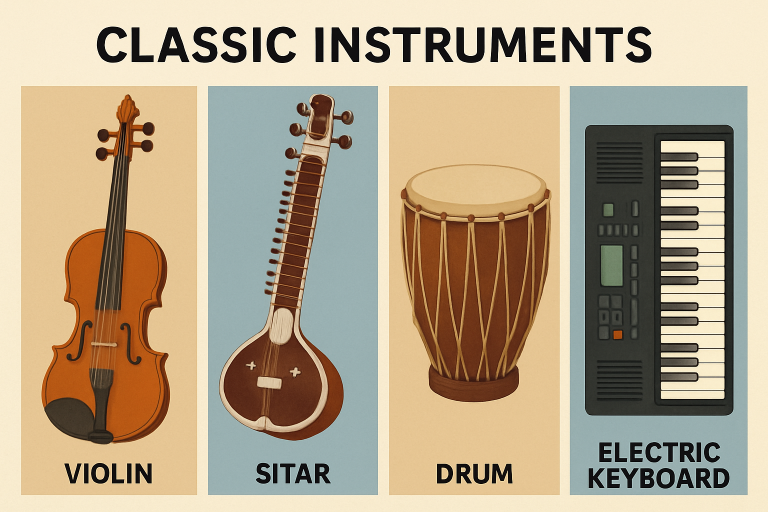
Technological Innovations in Instrument Design
The development of musical instruments has been closely intertwined with advances in technology. From the meticulous craftsmanship of Stradivarius violins to the electric guitars that shaped rock and roll, every technological leap has expanded the possibilities of music-making. The integration of artificial intelligence (AI) and augmented reality (AR) over the past few years is transforming how musicians interact with their instruments and audiences.
Consider the Holosynth, which utilizes AR to create a three-dimensional environment where performers literally shape sound with their gestures. These innovations not only empower individual artists but also democratize music production, making sophisticated tools accessible to a global user base.
Such transformations are not solely about novelty—they change the very fabric of musical performance and education. Online platforms and music learning apps let learners experiment with virtual instruments, breaking down economic and geographic barriers to creativity. This new wave of technological synergy continues to challenge the notion of what an instrument can be.
Instruments as Catalysts for Creativity
Every musical instrument inherently suggests creative possibilities. For centuries, inventors and musicians alike have been drawn to the piano, whose dynamic capabilities revolutionized Western composition. Innovations in digital instruments and music software today enable users to blend acoustic samples, synthesized tones, and real-world soundscapes, giving rise to entirely new genres and modes of expression.
Modern music’s proliferation owes much to accessibility—bedroom producers and hobbyists now have the same powerful software as professional studios. Instruments like the MIDI controller or the modular synthesizer encourage playful experimentation, turning the act of playing into a gateway for spontaneous creation. Just as the invention of the saxophone sparked the rise of jazz, today’s tools are seeding the subsequent musical revolutions.
Preserving Traditional Instruments in a Modern World
The race toward innovation does not diminish the need to safeguard the past. Traditional instruments form an essential part of our collective heritage and offer a window into the cultures from which they arise. Institutions such as the Musée de la Musique in Paris curate extensive collections, preserving not only the objects themselves but also the skills, stories, and rituals associated with them. These preservation efforts help ensure that future generations can appreciate and learn from the musical legacies of their forebears.
The Global Exchange of Musical Instruments
Instruments frequently transcend their places of origin, evolving as they pass through diverse cultural landscapes. The violin, created in Italy, is now heard in everything from Appalachian bluegrass to Indian classical music. The oud, a centuries-old Middle Eastern lute, has influenced many modern Western stringed instruments, illustrating music’s inherent capability to connect disparate cultures and inspire hybrid forms. This continual exchange fosters creativity and mutual understanding, reinforcing music’s role as a universal language.
Ethnomusicology: Studying Instruments in Cultural Context
Ethnomusicology explores musical instruments as living artifacts, inseparable from the societies that create and use them. Rather than simply examining physical characteristics, ethnomusicologists analyze how instruments function in rituals, celebrations, and daily life. This field offers crucial insights into the roles that instruments play in reinforcing social structures, expressing collective values, and fostering resilience in the face of change.
Conclusion
Musical instruments stand at the crossroads of tradition, innovation, and creativity. As bridges between generations, cultures, and artistic movements, they nurture personal and collective identity, sustain heritage, and open doors to unimagined possibilities. Whether exploring new technologies or honoring time-honored practices, the ongoing evolution of musical instruments continues to enrich and reflect the vibrant diversity of human experience.



About Author
