Sustainable Pavement Solutions for Modern Commercial Spaces
Table of Contents
- Permeable Pavement Systems
- Recycled Materials in Paving
- Cool Pavements and Reflective Coatings
- Warm-Mix Asphalt Technology
- Smart Pavement Technology
- Self-Healing Asphalt
- Decorative Paving
- Conclusion
As commercial properties evolve to meet contemporary demands, sustainability is playing a pivotal role in infrastructure development. Modern paving technologies are at the forefront of this movement, offering innovative, eco-friendly solutions. As trends shift toward green construction, sustainable pavement options are becoming essential for commercial property owners seeking to improve efficiency and reduce environmental impact. Businesses seeking effective solutions can explore commercial paving options tailored to today’s needs.
From reducing stormwater runoff to using recycled aggregates, every aspect of sustainable pavement delivers benefits for both business owners and the environment. These innovations also support regulatory compliance and long-term cost savings. By integrating new technologies, property managers enhance the function and visual appeal of high-traffic spaces while demonstrating a commitment to sustainability.
Permeable Pavement Systems
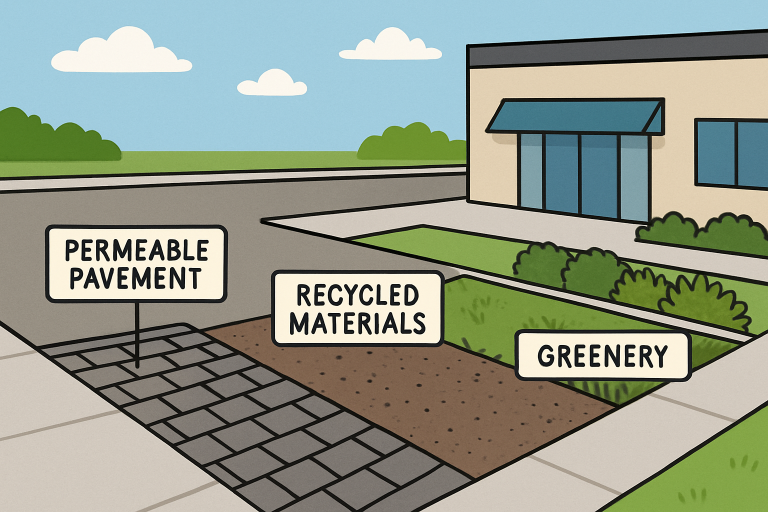
Permeable pavement is a transformative solution that addresses urban water management challenges. By enabling rainwater to drain through the pavement surface, these systems minimize surface runoff, significantly reduce flooding risks, and protect water quality. Beyond commercial applications, residential paving can also benefit homeowners by creating driveways, patios, and walkways that manage stormwater efficiently while enhancing curb appeal. Permeable pavements are especially effective in parking lots and walkways for commercial centers, where stormwater management is a top priority.
Recycled Materials in Paving
Commercial and public projects are increasingly adopting recycled materials, such as Reclaimed Asphalt Pavement (RAP) and Recycled Concrete Aggregate (RCA). Utilization of these components significantly reduces the need for new resource extraction, curtails landfill waste, and lowers project costs. Modern recycling processes ensure that these materials meet the durability standards required for high-traffic areas, making them ideal for sustainable development.
Cool Pavements and Reflective Coatings
Managing heat is crucial in bustling commercial spaces, especially in urban regions prone to the urban heat island effect. Cool pavements leverage materials and surface treatments that reflect more sunlight and absorb less heat, resulting in lower surface temperatures and improved comfort for property occupants and visitors. Reflective coatings can be applied retrospectively to existing pavements, providing business owners with a straightforward option to reduce cooling costs in adjacent buildings and contribute to a more hospitable environment for all.
Warm-Mix Asphalt Technology
Unlike traditional paving strategies that require heating materials to high temperatures, Warm-Mix Asphalt (WMA) uses chemical additives or organic waxes to reduce production and placement temperatures. This method reduces fuel consumption, lowering greenhouse gas emissions and improving site safety for work crews. WMA also enables extended paving seasons and improved compaction, making it an optimal solution for busy commercial thoroughfares that demand minimal downtime and rapid project completion. The Federal Highway Administration (FHWA) supports WMA as a core part of sustainable infrastructure strategies. Its adaptability to various climates and traffic conditions ensures long-lasting road performance, while the reduced environmental footprint aligns with modern sustainability goals. As cities continue to prioritize green infrastructure, WMA offers a practical and efficient path forward.
Smart Pavement Technology
With advancements in sensor technology and the Internet of Things (IoT), commercial pavements are now active data-gathering surfaces. Smart pavements integrate embedded sensors to track real-time information on temperature, traffic flow, and structural health. This allows property managers to anticipate maintenance needs proactively, thereby minimizing disruptions and total lifecycle costs. In addition, smart-enabled surfaces can streamline vehicle navigation within large parking areas, offering efficient experiences for both operators and customers.
Self-Healing Asphalt
To extend the service life of paved surfaces, developers are turning to self-healing asphalt technology. This innovative material can autonomously repair minor cracks as they form, using embedded microcapsules that release healing agents in response to stress or damage. The reduction in maintenance frequency translates into significant sustainability gains, lower repair costs, and fewer traffic disruptions in busy commercial centers.
Decorative Paving
For businesses, curb appeal and first impressions matter as much as functionality. Decorative paving—using stamped designs, colored aggregates, and textured finishes—allows commercial spaces to showcase their brand identity while ensuring pedestrian safety and long-term durability. Techniques such as exposed aggregate and colored concrete bring vibrancy to sidewalks, plazas, and courtyards, making these areas inviting and distinctive for visitors and clients alike.
Conclusion
Progressive pavement solutions are reshaping the look and performance of commercial spaces. Through permeable pavements, recycled materials, incredible pavement innovations, warm-mix asphalt, smart technologies, self-healing materials, and decorative finishes, business owners can create infrastructure that is attractive, durable, and ecologically responsible. Embracing these strategies isn’t just environmentally sound—it’s a forward-thinking approach for any commercial property aiming for long-term success and community appeal.

How To Make The Outside of Your Home More Secure

Things to Consider Before Buying a Home

3 Economical Curb Appeal-Boosting Home Updates
About Author
